Introduction
Giving is a divine principle that reflects the very nature of God. The Scriptures declare in John 3:16, “For God so loved the world that He gave His only begotten Son.”
This truth reveals that love and giving are inseparable — genuine love always expresses itself through generosity.
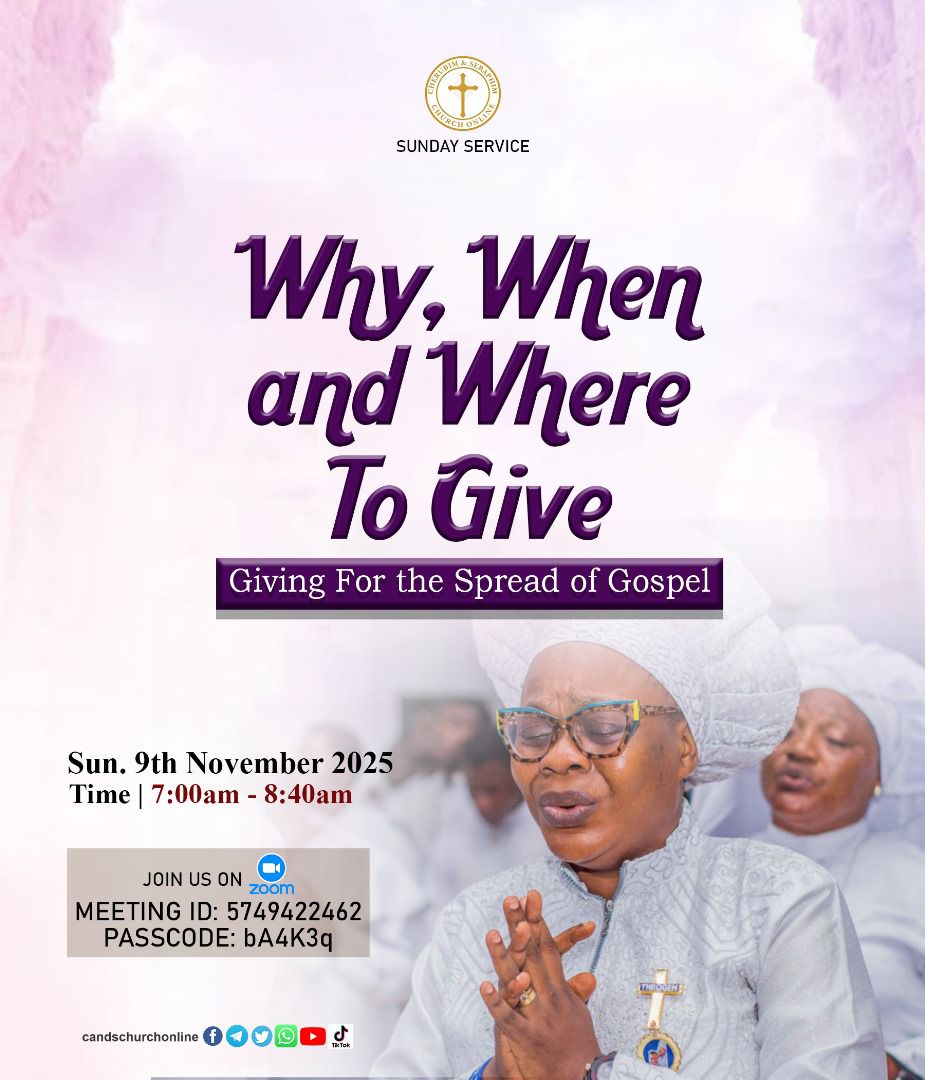
The teaching, drawn from 2 Corinthians 8–9, Genesis 4, and Mark 12:41–44, explored the heart, timing, and place of giving. It reminded believers that giving is not just a financial act but an act of worship, obedience, and partnership with God in advancing His kingdom.
📖 Bible Teaching Highlights
1. Understanding the Source of All Things
Believers were taught that life and every possession come from God.
Since God is the giver of life, giving back to Him — whether time, money, or service — is an acknowledgment of His ownership.
“You cannot truly give until you realize that all you have was given to you by God.”
Giving, therefore, becomes an expression of gratitude, not obligation. It is a joyful return of what already belongs to God.
2. The Heart of Giving — Following God’s Example
The lesson emphasized that the foundation of all giving is God’s own example.
In John 3:16, God demonstrated the highest form of love through sacrificial giving — He gave His best.
Believers were urged to give meaningfully and sacrificially, not out of surplus or pressure, but from love.
“True giving must be significant — it should cost you something.”
Every act of giving should mirror God’s generosity, showing that our hearts align with His.
3. Giving as Worship — The Case of Cain and Abel
Drawing from Genesis 4, the teaching explored the story of Cain and Abel.
Both brothers gave offerings, but God accepted Abel’s and rejected Cain’s — not because of the amount, but because of the heart.
This revealed that God examines both the giver and the gift.
“The right offering with the wrong heart is still unacceptable before God.”
Believers were encouraged to purify their motives and give from a place of reverence, gratitude, and obedience.
4. The Principle of Generosity and Grace
The Macedonian churches in 2 Corinthians 8 were highlighted as models of grace-filled giving.
Despite deep poverty, they gave beyond their ability with joy and sincerity.
“True generosity is not measured by abundance, but by willingness.”
This shows that giving is not reserved for the rich — it’s a grace available to all who love God and desire to honor Him.
5. The Widow’s Mite — Giving Beyond Measure
From Mark 12:41–44, the story of the widow’s mite was used to illustrate that God values sincerity over size.
The widow’s small coins outweighed the rich men’s large offerings because she gave her all.
“Heaven measures giving by sacrifice, not by amount.”
Believers were reminded that even the smallest offering, when given with love and faith, carries great weight in God’s eyes.
6. When and Where to Give
The teaching stressed that giving must be timely, purposeful, and directed toward God’s work.
- When to give: Always — in times of plenty or lack, because obedience should not depend on circumstance.
- Where to give: To the causes that advance God’s kingdom — supporting the church, missions, the needy, and the gospel outreach.
“Your giving is most meaningful when it aligns with God’s purpose.”
Believers were urged to give where their contribution makes eternal impact , where lives are transformed, and Christ is proclaimed.
7. The Spirit of Consistent and Cheerful Giving
Referencing 2 Corinthians 9:7, it was taught that God loves a cheerful giver.
Consistency in giving reflects faith, trust, and maturity in one’s walk with God.
“Giving consistently breaks the power of greed and keeps your heart aligned with heaven.”
Believers were encouraged to give regularly , not only money, but also time, service, and compassion , to build up God’s work and bless others.
8. Kingdom Giving — Beyond Material Offerings
The final point emphasized that the first thing believers must give is themselves.
Until a person is fully surrendered to God, their giving remains incomplete.
“You can’t give meaningfully until you’ve given yourself to God.”
Kingdom giving is marked by willingness, cheerfulness, faith, secrecy, and sacrifice.
It’s not about recognition or exchange, but about love, obedience, and alignment with God’s mission.
✝️ Conclusion
The teaching concluded with this truth:
- Giving begins with surrender — of self before substance.
- True generosity is measured by sacrifice, not surplus.
- Consistent giving is a form of worship that reflects trust in God.
- God values the heart of the giver more than the size of the gift.
Every believer is called to be a cheerful, consistent, and kingdom-minded giver — giving not out of compulsion, but from gratitude and love, knowing that we are stewards of all that belongs to God.