🔰 Introduction
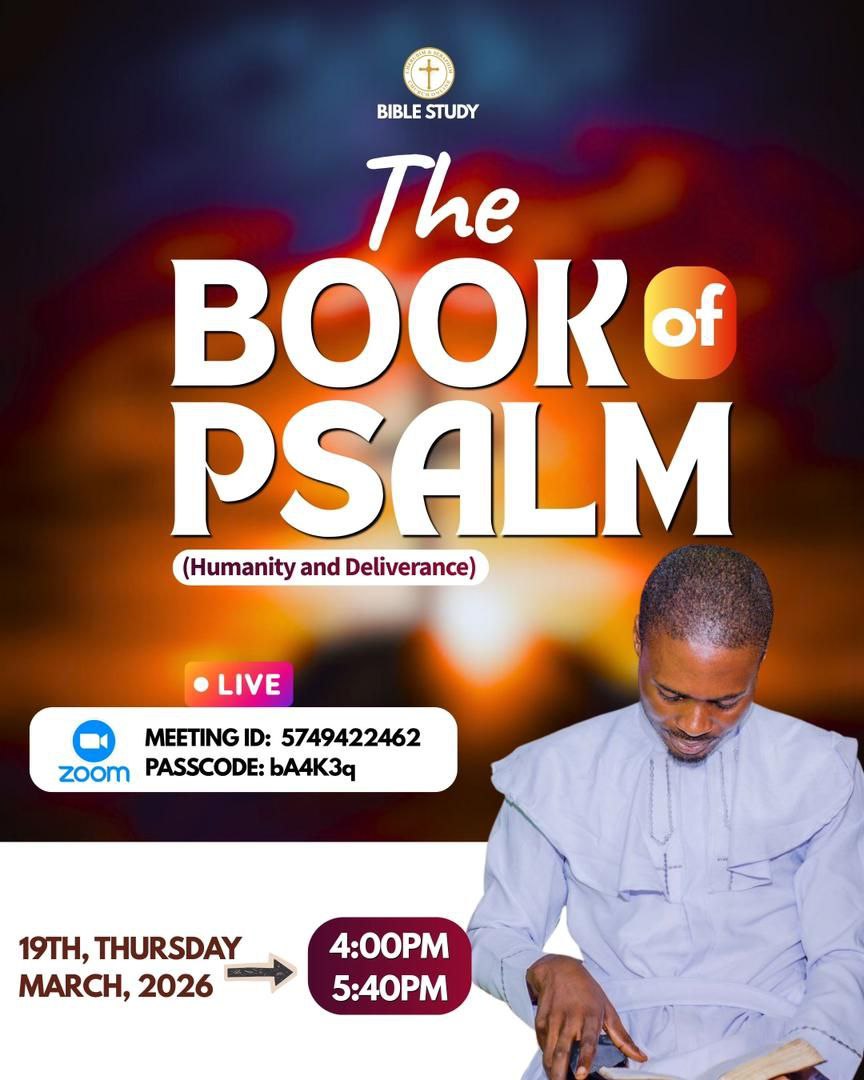
This teaching provided a deep exploration of the Book of Psalms, revealing it not merely as a collection of songs, but as a prophetic and Christ-centered portion of Scripture. The study emphasized that Psalms point consistently to Jesus Christ, while also teaching believers about righteousness, worship, and fellowship with God. Participants were encouraged to move beyond ritual reading into true understanding and transformation through the Word.
BIBLE TEACHING HIGHLIGHTS: Understanding the Book of Psalms
1. Structure and Divine Inspiration of Psalms
The Book of Psalms is a structured and inspired compilation of writings.
- It is divided into five sections, each ending with a doxology.
- Written by multiple authors such as David, Asaph, the sons of Korah, Solomon, and others.
- Though written by different individuals, it carries a unified divine message.
Teaching Emphasis:
Scripture is divinely inspired, even when delivered through different vessels.
2. The Prophetic Nature of Psalms
The Psalms are not just devotional songs—they are prophetic.
- They reveal truths about God’s plan of redemption.
- They point forward to the coming of Christ.
- They combine worship with revelation.
Teaching Emphasis:
The Bible, including Psalms, ultimately reveals Jesus Christ.
3. Psalms as a Revelation of Christ
Specific Psalms were highlighted to show Christ clearly:
- Psalm 16 — points to the resurrection.
- Psalm 22 — reveals the suffering of Christ.
- Psalm 23 — shows Christ as the Shepherd.
- Psalm 24 — presents Him as the King of Glory.
These passages demonstrate that Christ is central to Scripture.
Teaching Emphasis:
Understanding Scripture requires seeing Christ in every passage.
4. The Purpose of Spiritual Songs
Spiritual songs are meant to edify and transform believers.
- True songs must align with Scripture.
- They should point to Christ, not just emotions or experiences.
- Not every song labeled “spiritual” carries truth.
Teaching Emphasis:
True worship through songs must reflect Christ and promote spiritual growth.
5. Righteousness, Holiness, and God’s Presence
The Psalms teach what it means to dwell in God’s presence.
- God’s presence is not limited to a physical place.
- It is experienced through righteousness and sincerity.
- Faithfulness and purity are required for true fellowship.
Teaching Emphasis:
Holiness and sincerity are essential for communion with God.
6. Spiritual Growth Over Ritual Practice
A strong warning was given against treating Psalms as rituals.
- Reading Psalms is not a formula for automatic breakthroughs.
- The goal is transformation, not mere repetition.
- True study should lead to Christlikeness.
Teaching Emphasis:
Spiritual growth is more important than religious routines.
Conclusion
The central message of the teaching was clear:
The Book of Psalms is a powerful revelation of Christ, not just a collection of songs.
True engagement with Scripture leads to transformation, not ritual.
Believers are called to study with understanding, live in righteousness, and grow into deeper fellowship with God.
A Christ-centered approach to the Psalms leads to spiritual maturity and a life rooted in God’s presence.